01. June 2025
'I wish they'd killed me': Forgotten war inflicts unspeakable harm on women in Ethiopia
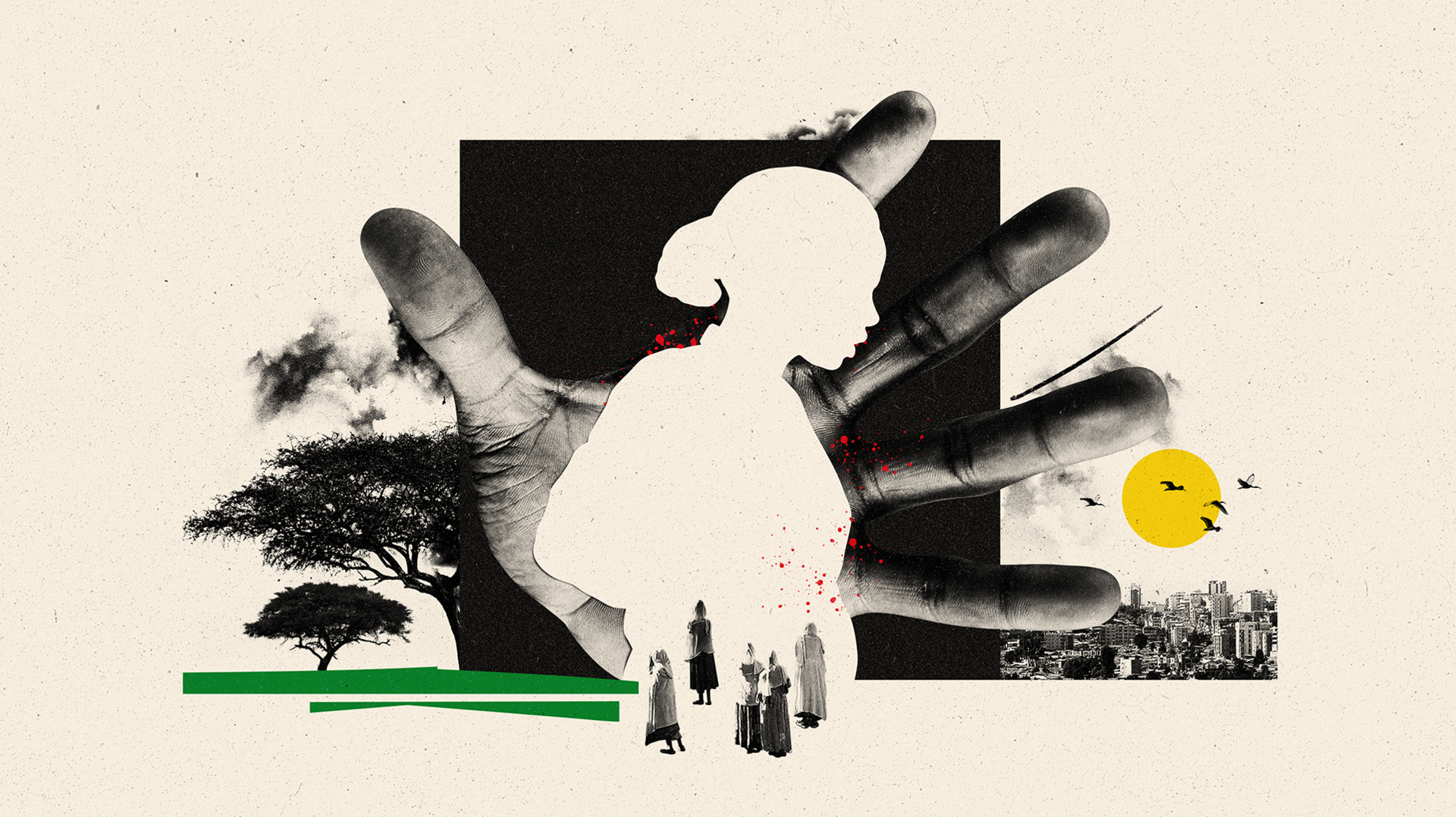
Warning: This report contains descriptions of rape and sexual violence. Victims’ names have been changed and identifying details omitted to protect their privacy and safety.
Enat was at home with her eight-year-old niece when soldiers arrived on a Sunday morning, she recalls.
The Ethiopian army was conducting home searches in the Amhara region on 5 January this year as part of a crackdown on a growing rebellion launched by local militias known as Fano.
Enat says three men in army uniform entered her home in South Gondar and began questioning her about her family background and whether Fano fighters had visited the beer hall where she worked.
The 21-year-old admitted they had.
“How could we lie? How can we hide the truth?” Enat says, noting that Fano—an Amharic term loosely translated as volunteer fighters—is made up of local residents.
The situation quickly escalated.
After questioning her about her family, Enat says the soldiers began insulting her, then threatened her niece with a gun when the young girl started crying.
Enat says one of the soldiers then raped her in front of her niece while the others stood guard.
“I begged them not to hurt me. I called on the saints and pleaded with them. But their hearts were unyielding. They violated me.”
Enat, who is from Ethiopia’s Amhara ethnic group—the second largest in the country—is among thousands of women believed to have been sexually abused and raped since the conflict between the Ethiopian army and Fano began in August 2023.
Sexual violence in the region is largely underreported, but the BBC has compiled data showing thousands of rape reports between July 2023 and May 2025, with victims ranging in age from eight to 65.
While restrictions have prevented independent media from entering Amhara to cover the conflict, the BBC team in Nairobi, Kenya, managed to speak with women and doctors in the region—offering a rare insight into the human cost of the crisis.
The conflict began when the government attempted to disband regional military groups—including those in Amhara—that had fought alongside the national army during the 2020-2022 civil war in the neighboring Tigray region.
Fano militias felt betrayed by the move and believed it would leave them vulnerable to attacks from Tigray and elsewhere—especially as violence against the Amhara community had intensified, according to rights groups.
In response, Fano launched a rebellion, seizing major towns. They claim to be fighting for regional autonomy and protecting their communities from marginalization by the Ethiopian government.
The insurgency has led to a violent crackdown by the army, which labels Fano as “radical ethno-nationalists.
Since the conflict started, both sides have been accused of numerous human rights abuses—including extrajudicial killings, arbitrary detentions, forced displacement, property destruction, looting, and widespread sexual violence, including rape.
Rights groups such as Amnesty International say there is evidence that the army is disproportionately responsible for the abuses. They also note that Amhara people in other parts of Ethiopia have been deliberately targeted by security forces and other armed groups.
Before the attack, Enat had never had sex and planned to marry in a ceremony at her local Ethiopian Orthodox Church—following the tradition of other women in her family.
Such marriages are highly revered among the predominantly Orthodox Christian Amhara people, and they require couples to remain “pure” with no sexual contact until marriage.
“Before that day, I had never known a man,” she says.
“It would have been better if they had killed me.”
Tigist, 18, from West Gojjam in the Amhara region, worked in her family’s small traditional teahouse before the attack.
She describes how in January 2024, a soldier who was a regular customer groped her. She rejected him—an act she believes led to the assault.
Later that evening, as she was walking home from work, she says three soldiers—including the man who groped her—ambushed her on the street and gang-raped her on the pavement.
“My family found me unconscious on the roadside,” she recalls. “They carried me to a clinic, where I spent five days.”
Since the attack, Tigist says she has been unable to leave her house—paralyzed by fear of men and the outside world.
“My fear stops me from going to work… Whenever I see soldiers or any men, I panic and hide.”
She ended up withdrawing from her life and breaking off her engagement. She says she never told her fiancé why or what had happened.
Overwhelmed by despair, Tigist attempted suicide, but her family intervened just in time. She says she has thought about taking her life since then but has promised her family she will not try again.
The BBC collected data from 43 health facilities in Amhara—roughly 4% of all health facilities in the region—and other medical sources to gain a snapshot of the situation.
These facilities reported 2,697 rape cases between 18 July 2023 and May 2025. Children under 18 accounted for 45% of the cases.
Just over half of the victims tested positive for sexually transmitted infections (STIs), while many also became pregnant and suffered severe psychological trauma.
However, many victims of sexual violence never report the crime or seek treatment—fearful of stigma or learning they may have contracted an STI or become pregnant.
For this reason, a senior health expert—who spoke to the BBC on condition of anonymity due to security concerns—says the victims who seek help at facilities in the Amhara region are only “the tip of the iceberg.
Lemlem is among those who never reported her rape or sought medical treatment, terrified of discovering she might have an STI such as HIV.
The 23-year-old from South Gondar says government soldiers entered her house on 6 January to ask for information—a routine army practice.
She says when she did not provide what they wanted, one of the soldiers raped her.
“He threatened me, saying: ‘If you scream, one bullet is enough for you,’” Lemlem says.
“I cried non-stop for a whole month. I couldn’t eat. All I did was cry. I couldn’t bear to walk. And I fell seriously ill.”
She says the assault has driven her away from church, where she fears she may be the subject of gossip.
“It’s terrible to have been born a woman. If I were a man, they might have beaten me and left—but they wouldn’t have destroyed my life like this,” Lemlem says, explaining how the trauma of the attack has shaped her feelings about being female.
Medics interviewed by the BBC say there has been a sharp increase in the number of sexual violence victims they have treated since the conflict began.
“They arrive trembling, too scared even to speak,” one medic says.
Yet those who do come forward are reluctant to name their attackers and rarely seek justice—in part because the conflict has led to a breakdown in law and order. Instead, most who seek medical help do so out of fear of pregnancy.
Others seek treatment long after the attack, by which time certain medications for STIs such as HIV are no longer effective.
HIV can often be prevented with post-exposure prophylaxis—but only if it is administered soon after sexual contact with an infected person.
Another medic notes that many victims say they are unable to access treatment promptly due to transport disruptions and road blockages caused by the conflict.
A senior medic warns that a public health and social crisis may be imminent.
Based on information gathered by health centers, they say they “have identified signs that HIV infections may rise and that mental health problems could reach catastrophic levels”—noting that some victims have attempted suicide.
Figures from Ethiopia’s Health Ministry in 2022 showed that the HIV rate in the region was around 1.1 per 100 people—higher than the national average.
While both sides in the conflict have carried out assaults, medical staff report seeing more cases involving Ethiopian army soldiers than Fano militia. A government employee with access to relevant information—who agreed to speak on condition of anonymity—also confirmed this.
Most rape incidents were reported in urban areas where the army maintains bases and exerts control. However, experts point out that people living in cities have better access to treatment, so they are more likely to seek help and report attacks.
The BBC was unable to interview any victims of assaults by Fano fighters due to limited access to areas where the militia is based.
In June 2024, the UN Office of the High Commissioner for Human Rights reported that the Ethiopian National Defence Force—including the army—had committed sexual violence, including against minors, in the Amhara region during the conflict with Fano militia.
The BBC asked Ethiopia’s Ministry of Defence to respond to the allegations, but despite months of waiting, no reply was received.
Repeated BBC requests for detailed information from regional authorities were also unsuccessful.
Fano leader Asres Mare Damtie told the BBC the group was unaware of any involvement by its fighters, saying no accusations had been made against them and that the group enforces severe punishment—including death—for offenders.
The BBC has learned that a government-commissioned investigation led by Ethiopia’s Bahir Dar University into conflict-related sexual violence against women in Amhara has begun, with findings expected to be made public in the coming months.
In 2021, when the army and its allies—including Fano at the time—faced similar allegations over their conduct in the Tigray conflict, the government condemned the use of rape but dismissed the claims as “biased and flawed.
To date, no official action against perpetrators has been publicly disclosed.
Amnesty International has expressed concern about what it describes as a persistent pattern of impunity in Ethiopia’s army. “There is no meaningful effort to bring perpetrators to justice,” says the organization’s regional researcher Haimanot Ashenafi.
“They’re still fighting, still out there with no consequences for what they’ve done… survivors who have gone through this life-changing experience deserve justice.”
For Enat, the consequences of the attack have been far-reaching.
A month after the assault, she fled her village to escape the trauma.
That was when she learned she was pregnant as a result of the rape.
“I started vomiting,” she recalls.
She considered having an abortion—which is legally permitted in Ethiopia up to 12 weeks of pregnancy in cases of rape—but she was scared.
“I feared God, and I thought about my mother. What would happen to her if I died during the abortion?”
She gave birth to a daughter in early September after three days of labor.
Despite what happened to her, Enat sees the baby as a “gift from God.
But she is currently living with a relative and unable to work because she has to care for her daughter. She worries about the future and how she will provide for herself and her child.
“If this is what it means to be alive, then yes, I am alive,” she adds.
If you, or someone you know, have been affected by the issues raised in this story, details of organizations offering information and support are available at BBC ActionLine.
This is part of the Global Women series from the BBC World Service, sharing untold and important stories from around the globe
Police bullied me into admitting murder, says man wrongly jailed for 38 years
UK inflation rate falls for first time since March to 3.6%
‘Scotland cash in almost 30 years of glorious failure as dreams come true’
‘It would have been better if they’d killed me’: A forgotten war destroying women’s lives
On the front line of Europe’s standoff with Russia’s sanction-busting shadow fleet
Is this what spying by China can look like?
First kiss dates back 21 million years, say scientists
Epstein saga reveals Republican rifts - and the power of Trump’s base
MI5’s ‘Chinese spies’ alert and Trump defends MBS
‘I worked, I paid taxes - then the bank took my home’
Baby Shark: How a 90-second clip created a $400m business
Tech Decoded newsletter: Follow the world’s top tech stories and trends - sign up
Police bullied me into admitting murder, says man wrongly jailed for 38 years
‘I worked, I paid taxes - then the bank took my home’
Our son’s about to turn three - finding new childcare has left us at our wits’ end
MI5’s ‘Chinese spies’ alert and Trump defends MBS
Hotel adverts banned over misleadingly cheap rooms
Release of Epstein files awaits Trump’s signoff after clearing Congress
Is this what spying by China can look like?
‘Scotland cash in almost 30 years of glorious failure as dreams come true’
Tech giant seeking $1.7bn from Mike Lynch’s estate after yacht death
Epstein saga reveals Republican rifts - and the power of Trump’s base
Watch Nicôle Lecky’s provocative new drama
Which celebrity will stand the heat in the kitchen?
Antiques experts search for their latest treasures
Jools Holland celebrates Walking to New Orleans
Copyright © 2025 BBC. The BBC is not responsible for the content of external sites. Read about our approach to external linking.