12. June 2025
Epstein Case Highlights Divisions Among Republicans and Influence of Trump's Supporters
This video can not be played
Watch: US Senate unanimously agrees to pass bill to release Epstein files
Following Congress’s vote to compel the justice department to disclose its files on Jeffrey Epstein, the legislation will now proceed to President Donald Trump’s desk.
If Trump signs it into law as anticipated, it will conclude a notable and swift shift in his stance.
For months, Trump downplayed demands to release the government’s complete collection of documents concerning the late financier and convicted sex offender. In July, he characterized the case as “rather mundane.”
This changed on Sunday when—amid growing Republican support in the House for disclosure—the president reversed course and encouraged them to proceed. His turnaround paved the way for a decisive 427-1 vote on Tuesday.
His reversal represented a rare instance where Republican lawmakers influenced Trump to act and publicly alter his position, rather than the opposite.
Regardless of what new details future files may reveal, the episode revealed internal divisions within the Republican Party and underscored the sway of Trump’s Make America Great Again (Maga) base.
It also demonstrated that, despite his efforts, he might have struggled to divert attention from the Epstein files without endorsing the vote.
“I believe he recognizes that this issue resonates negatively with average Republicans,” said Martha Zoller, a conservative radio host and Republican strategist in Georgia.
“I think Trump felt compelled to act now to realign himself with public sentiment,” she added.
Congress approves bill to release Epstein files that will head to Trump’s desk
When will the Epstein files be released now that the Senate voted to make them public?
What do we know about the Epstein files?
Trump calls on House Republicans to vote to release Epstein files
A NPR/PBS News/Marist poll conducted in late September—when Trump had not yet supported file release—indicated that 67% of Republican registered voters favored releasing all Epstein files with redacted victim names. Another 18% supported partial release with similar redactions.
“Transparency regarding these events is critically important to voters,” Chris Ager, former chair of the New Hampshire Republican Party, told the BBC.
He applauded Trump’s reversal, arguing it reflected a healthy party “where disagreements can occur… and lead to a consensus where essentially everyone agrees: Release the files.”
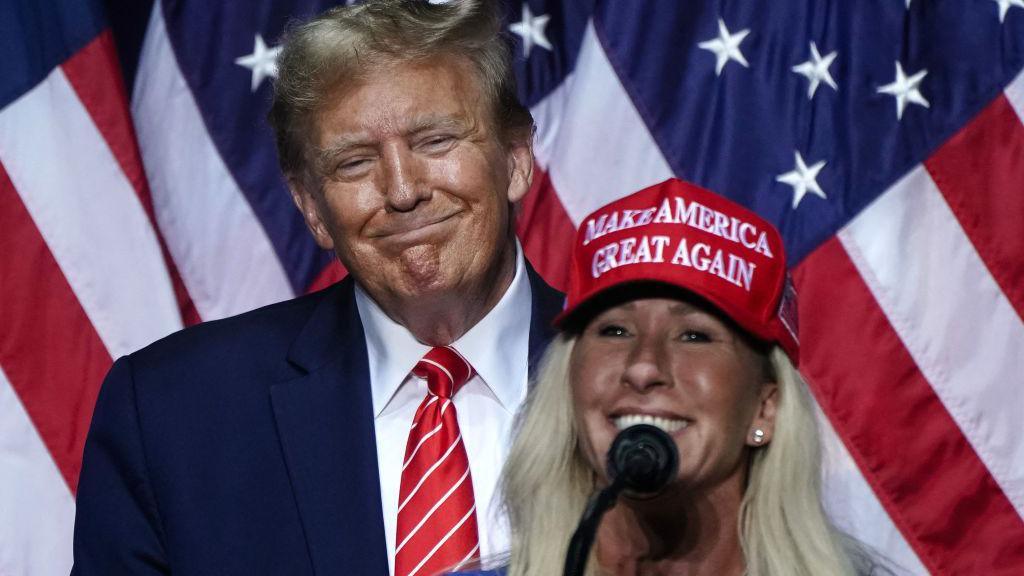
Congresswoman Marjorie Taylor Greene stated on Tuesday that the Epstein files issue had “divided Maga supporters”
For much of this year, however, sharp disagreements persisted. Trump’s reversal came as a House rebellion seemed increasingly likely.
The most prominent dissenter, Congresswoman Marjorie Taylor Greene of Georgia, said at a press conference with Epstein survivors on Tuesday that the matter had “torn Maga apart.”
Due to her outspoken opposition, Trump labeled her a “traitor” on Truth Social. Typically, such public criticism from the president would silence Republican dissent, especially from those seeking re-election. But reflecting the political power of the Epstein issue, Greene pushed back.
“He called me a traitor for supporting these women and refusing to withdraw from this discharge petition,” Greene said on Tuesday.
This video can not be played
Watch: Marjorie Taylor Greene directs anger at Trump over Epstein files
The House would advance the legislation, Greene stated, “because the American people, whom we represent, demanded this vote.”
Greene, who initially broke with Trump in the spring, has become a visible symbol of growing dissent within Trump’s Maga movement—not only on Epstein but also on issues like the US bombing of Iranian nuclear sites in June and the president’s ongoing focus on foreign conflicts.
On the Epstein matter specifically, Greene and others in the movement have advocated for greater transparency despite Trump’s desire to concentrate on other topics. After Tuesday’s congressional votes, they can claim a tangible success.
“The saga demonstrates the considerable power of the Republican base,” party strategist Rina Shah told NPR this summer. “MAGA voters are incensed.”
“This pressure is compelling even Trump’s most loyal allies to break ranks. It signals a Republican Party that is increasingly populist, where grassroots movements can drive leaders to act or face consequences.”
The Epstein vote has also eclipsed other White House initiatives. Last week, President Trump announced he would reduce tariffs on groceries like coffee, bananas, and beef amid rising cost-of-living concerns.
“I think he would prefer public discussion on those topics rather than Epstein,” Zoller, the Georgia Republican strategist, remarked.
One senior Trump administration official told Axios that the president abandoned his opposition to the legislation because the Epstein controversy was becoming a “major distraction.”
Greene herself argued that the White House was misguided in resisting file release instead of focusing on other priorities.
“It’s entirely the wrong direction,” Greene told POLITICO. “The urgent issues are healthcare and affordability for Americans. That should be the focus.”
The White House, in a statement to the BBC, said “by releasing thousands of pages of documents, cooperating with the House Oversight Committee’s subpoena request, and President Trump recently calling for further investigations into Epstein’s Democrat friends, the Trump Administration has done more for the victims than Democrats ever have.”
Beyond Epstein, Trump’s influence on the party has been tested—and occasionally resisted this week. There are indications of potential further rifts.
His public efforts to persuade Indiana’s leaders to redraw congressional maps to benefit Republicans before the 2026 midterm elections encountered a significant obstacle on the same day as the Epstein vote.
This video can not be played
Watch: How much do Americans care about the Epstein story?
The Republican-controlled Indiana Senate voted on Tuesday to adjourn until January, signaling it would not address redistricting. This occurred despite substantial pressure from the president and the state’s Republican governor, who has urged lawmakers to revise the maps.
Trump has even threatened to support primary challenges against senators opposing redistricting. But as with the Epstein issue, there has been defiance within the party.
“I’ve served as a legislator for 42 years. I won’t change my vote,” Republican Senator Vaneta Becker told CNN.
Referring to Indiana residents, she said, “Hoosiers are unaccustomed to being pressured this way. It does not reflect well.”
However, as Trump allies have noted, he has previously navigated internal opposition. Despite current defiance on several fronts, the president remains the dominant figure in the party.
“I believe the president will be commended once the information is released. Ultimately, outcomes matter more than the process,” said Mr Ager, referring to the Epstein files.
Trump echoed this in a Truth Social post Tuesday night, stating he was indifferent to the timing of the Senate vote. “I just don’t want Republicans to lose focus on all our Achievements.”