07. October 2025
Homeowner Faces Repossession Despite Years of Mortgage Payments
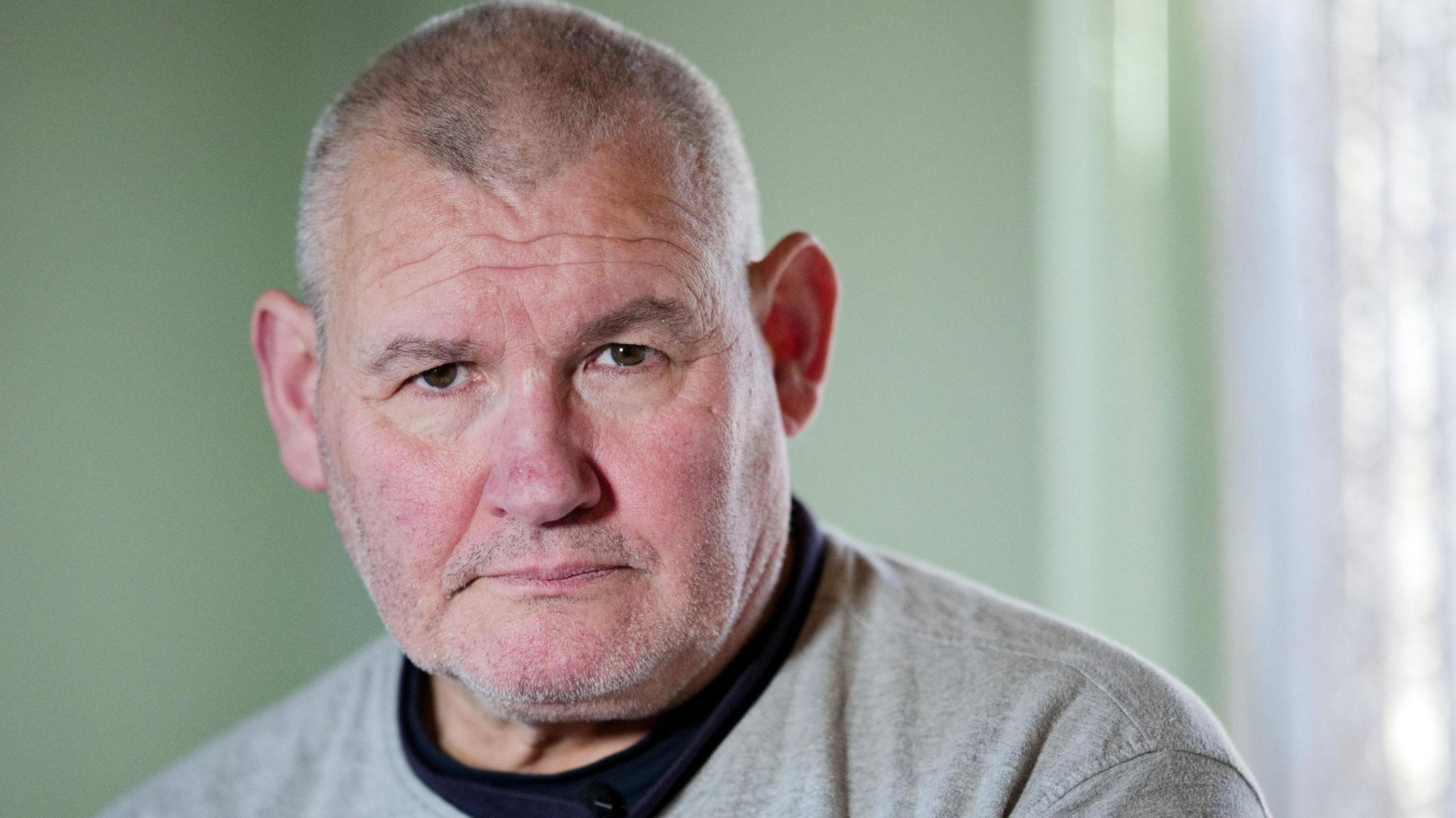
Jose Da Costa Diogo, who holds an interest-only mortgage, now finds himself unable to cover the £80,000 demanded by his bank
“I am anticipating the bailiff’s arrival to seize my keys and evict me,” shares Jose Da Costa Diogo, one of many individuals notified this year that their homes will be repossessed.
The 65-year-old discovered he would lose his Thetford, Norfolk, home during a brief county court hearing earlier this year.
The interest-only mortgage on the three-bedroom home was established over two decades ago, with the expectation that he and his former spouse would accumulate savings to eventually repay the principal amount.
However, the marriage dissolution and his ex-wife’s move to Brazil in 2015 left Mr Da Costa Diogo incapable of repaying the remaining £80,000.
Since his ex-wife remained on both the mortgage and property deeds, he was also unable to sell the home to settle the debt.
“I attempted to fulfill my obligations and continued covering all expenses,” he stated. “After 25 years, I have nothing left… but life must go on.
“I will be without a home.”
Jose expressed feeling as though he is awaiting bailiffs to confiscate his keys
Court statistics indicate that mortgage repossession orders in England and Wales reached 10,853 in 2024-25, the highest figure in five years.
Experts attribute the increase to factors such as rising interest rates and the escalating cost of living.
Mr Da Costa Diogo registered as homeless with Breckland Council, his local authority.
He is not alone in this predicament.
The BBC inquired with all English councils responsible for housing about the number of people declaring homelessness due to mortgage repossessions.
Based on data from 240 councils, the number has doubled—from 1,517 in 2022-23 to 2,370 in 2023-24.
It reached 3,406 in the most recent year.
Local government representatives note that rehoming those affected by repossessions is increasingly straining council resources.
Tom Hunt, chair of the Local Government Association’s Inclusive Growth Board, commented: “As more people seek council assistance, local authorities are forced to stretch budgets further.
“The temporary accommodation crisis confronting councils is intensifying.”
Lucy Davies volunteers at courts in Suffolk and Essex to aid individuals facing repossession hearings
Lucy Davies witnesses the devastation of repossessions regularly.
A housing law advisor with the Suffolk Legal Centre, she donates her expertise to those in need at courts in Suffolk and Essex.
“I observe the sheer volume of people impacted,” Ms Davies said.
“People often encounter difficulties through no direct fault of their own.
“Commonly, there are mental health challenges, employment issues, and family problems, and situations can rapidly spiral out of control.”
On the day the BBC accompanied Ms Davies at Ipswich County Court, where she volunteers with the Ipswich County Court Advice and Representation Service, none of the five individuals facing mortgage repossession cases appeared.
She noted this often stems from shame, despair, and the perception that losing one’s home is inevitable.
“Court proceedings can be intimidating, but they don’t have to be.”
She urged people to seek advice early and mentioned that cases are becoming “more severe or entrenched.”
Access to housing legal aid is growing more difficult, she explained.
Paul Gorton, of The Law Society’s housing law committee, concurred.
He stated that historical underinvestment in legal aid has resulted in fewer law firms offering housing legal aid services.
“Many individuals exceed legal aid eligibility thresholds yet cannot afford private legal advice,” Mr Gorton said.
“We face both legal aid provider shortages and restrictive eligibility criteria, leaving many in limbo.”
A Ministry of Justice spokesperson announced “the first significant funding increase for housing legal aid in thirty years—a 24% rise.”
“This investment will help ensure vulnerable individuals have effective access to justice while supporting a more stable legal aid sector,” the spokesperson added.
Karina Hutchins of UK Finance encouraged anyone struggling with mortgage payments to contact their lenders
Lenders consider repossession “an absolute last resort,” said Karina Hutchins, a principal in the mortgage policy team at UK Finance, a trade association for the banking sector.
She noted that while mortgage repossessions have gradually increased in recent years, current levels remain “historically low.”
“Repossessions are very uncommon.”
She reported that in the first quarter of 2025, approximately 2,000 homes were repossessed, compared to 13,000 in the same quarter of 2009 following the financial crisis.
“I understand customers may feel anxious and distressed when facing financial hardship, but they need not face it alone,” Ms Hutchins said.
“The sooner they communicate with their mortgage lender, the more support they can receive, and the greater the likelihood of resolving their mortgage arrears.”
Lender options, she said, include temporary payment reductions, budgeting tools, and referrals to debt charities.
Henry Sabati McRae’s mortgage arrears escalated to over £13,000
Henry Sabati McRae, a Croydon resident, has so far avoided repossession.
A trained software developer, Mr McRae’s financial troubles began after his brother’s death in 2020 and his mother’s passing in October 2023.
Since October 2024, the 51-year-old has been unemployed and, despite numerous job applications, has not secured a new contract.
“No matter your savings,” he said.
“They diminish rapidly within months. I stretched them as far as possible due to my conservative financial approach.”
If you have been affected by this story or need support, organizations offering help and information are available via the BBC Action Line.
Nevertheless, his mortgage arrears on his two-bedroom flat grew to around £13,000, and his bank warned that if the amount wasn’t reduced below £8,000, it would seek repossession.
“My top priority, and I believe for anyone, was maintaining shelter,” he said. “Otherwise, everything unravels.”
To survive, he has resorted to selling possessions online and accepting a loan from a friend.
Like many facing repossession, Mr McRae described the experience as profoundly “humiliating” and initially felt inclined “to shut out the world.”
However, realizing he wasn’t alone and discussing his situation has helped him devise a solution, much like tackling an IT problem.
Mike Williams has renegotiated his payments and agreed with a court to pay an additional 20% monthly to address his mortgage arrears
Businessman Mike Williams, living 10 miles south of Mr McRae in Caterham, Surrey, has also avoided repossession.
He assumed the mortgage on his self-built home after separating from his wife.
In three years, repayments on the interest-only loan, initiated two decades ago, have tripled.
He says this leaves him with “virtually no disposable income.”
In court, he arranged a repayment plan requiring an extra 20% monthly.
In five years, when the mortgage matures, he plans to sell the two-bedroom house he and his wife constructed.
“It holds significant sentimental value for me, so it is heart-wrenching,” he said.
As for Mr Da Costa Diogo, his bank has repossessed the property.
In the same month, the BBC observed a similar three-bedroom home in his Thetford street listed for £160,000—nearly double his owed amount.
Hours after losing his home, he was provided emergency accommodation in a small ground-floor studio in north Suffolk.
“I left my house with one suitcase and essential items and informed the council, ‘I am homeless.’
“It’s a basic shelter. I’m striving to simplify matters because complexity serves no purpose.
“I’m alive, and I will persevere.”
Additional reporting by Zoe Dennis, Stephen Menon, Jonathan Fagg, and Stuart Bailey.